

TL;DR:
- Chargeback representment is the process where merchants dispute chargebacks by resubmitting evidence for validation. It is most effective when evidence directly matches the reason code and recovery exceeds costs, but most merchants fail to fight, losing revenue. Implementing strong prevention and timely, targeted responses can significantly improve dispute outcomes and reduce overall chargeback volumes.
Chargeback representment is the formal process by which a merchant disputes a chargeback by resubmitting the original transaction to the card network, accompanied by evidence that the charge was valid. When the issuing bank accepts that evidence, the funds are returned to the merchant. The practical rule: fight a chargeback only when your evidence maps directly to the card network’s reason code and the expected recovery exceeds the cost of the process. Industry estimates indicate that chargeback losses amount to approximately $40 billion per year, which means the decision to contest or concede is a genuine revenue decision, not an administrative one.
Before you commit to a dispute, run through three immediate checks:
- Confirm the exact reason code on the chargeback notice and identify which evidence category it requires.
- Check your processor’s internal response deadline, which may be as short as 9 days even though Visa allows 30 days and Mastercard allows 45 days at the acquirer level.
- Pull your primary exhibits within 48 hours: authorization logs, delivery confirmation, and any customer communications relevant to that specific code.
Table of Contents
- What is chargeback representment, and how does it differ from a refund?
- Why should you fight chargebacks, and when does representment make sense?
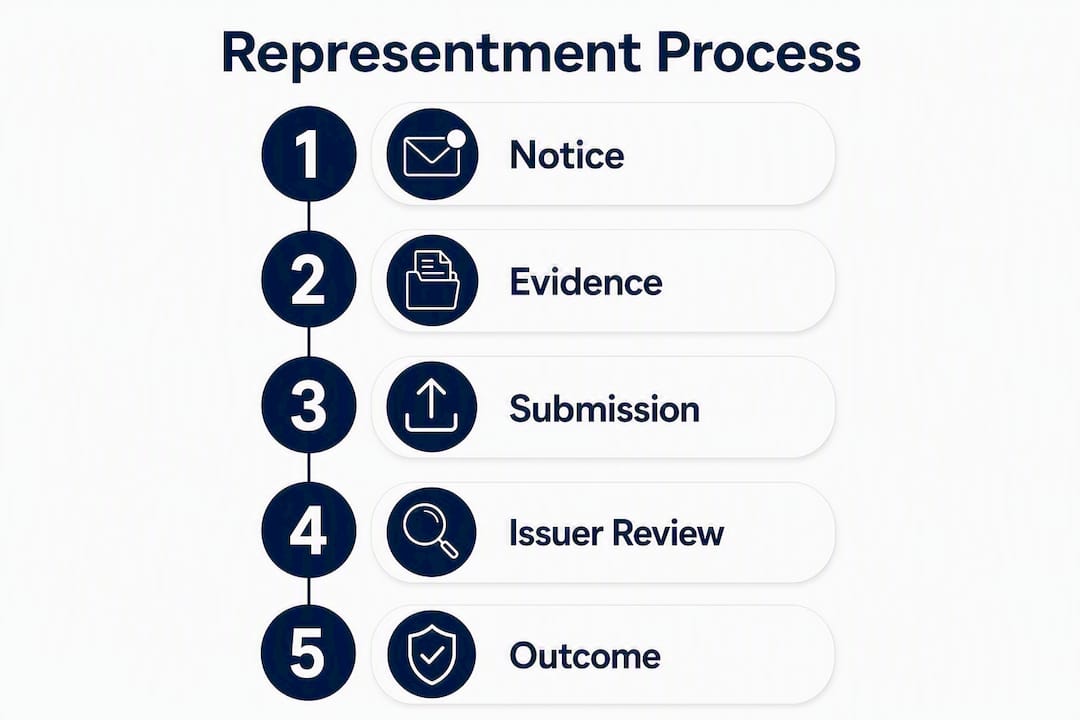
- How does the representment process work, step by step?
- What evidence wins a chargeback dispute?
- What happens after you submit, and what does escalation cost?
- How do you decide which chargebacks are worth fighting?
- A practical representment checklist and rebuttal letter template
- What practices raise your win rate and reduce future chargebacks?
- Key Takeaways
- The real trade-off merchants miss in chargeback representment
- Intelligentfraud helps you reduce disputes before they reach representment
- Useful sources
- FAQ
What is chargeback representment, and how does it differ from a refund?
A chargeback is a forced reversal initiated by a cardholder through their issuing bank. A refund is a voluntary credit you initiate. Representment sits in a different category entirely: it is your formal, evidence-backed reply to the issuer’s reversal, submitted through your acquirer or processor, asserting that the original charge was legitimate and should stand.
The lifecycle runs in a specific direction. The cardholder files a dispute with their issuer. The issuer debits your account and notifies your acquirer. Your acquirer passes the dispute to you with a deadline. You respond by assembling evidence and a rebuttal letter, which your acquirer packages and forwards back to the issuer as a “second presentment.” The issuer then rules in favor of either the cardholder or the merchant.
Representment is not a direct conversation between you and the cardholder. You cannot contact the issuer yourself. Every submission travels through your acquirer or processor, which means their formatting requirements and internal deadlines govern the process, not the card-network windows alone.
One scope clarification worth making explicit: representment applies to disputes that have already posted as chargebacks. If a dispute alert from Ethoca or Verifi reaches you before the chargeback posts, you have a different and often cheaper path, which is covered in the prevention section below. Once the chargeback is on the books, representment is the mechanism.
The four major reason-code families that commonly reach representment are fraud (unauthorized transaction), authorization (missing or improper auth), processing error (duplicate charge, incorrect amount), and consumer dispute (not received, not as described, credit not processed). Each family requires a different class of evidence, and submitting the wrong class loses the case even when the underlying sale was legitimate.
Why should you fight chargebacks, and when does representment make sense?
Merchants who actively contest chargebacks win roughly 50% of the time, yet the average business recovers only about 12.5% (one in eight) chargebacks because most merchants never fight. That gap is where representment creates direct revenue recovery. For a merchant processing $2 million annually with a 0.5% dispute rate, the difference between fighting and not fighting can represent tens of thousands of dollars per year.
Three scenarios justify contesting a chargeback:
- Strong evidence availability: You can produce exhibits that answer the issuer’s specific question for that reason code within your processor’s deadline.
- High transaction value: The expected recovery materially exceeds the cost of assembling and submitting the response package.
- Repeat abuse patterns: A customer or device fingerprint appears across multiple disputes, creating a documented pattern relevant to first-party friendly fraud.
When to accept the loss instead: low-probability reason codes where you lack the specific required evidence, transactions under a threshold where representment costs exceed recovery, and cases where the customer relationship has commercial value that outweighs the disputed amount.
One operational fact merchants frequently misunderstand: winning a representment recovers revenue but does not remove the original chargeback from network monitoring programs like Visa VAMP or Mastercard’s monitoring. Your dispute ratio counts the filing, not the outcome. Representment is a revenue-recovery lever, not a compliance strategy.
Pro Tip: Track your win rate by reason-code family, not just overall. A 70% win rate on processing-error codes and a 20% win rate on fraud codes tells you exactly where to concentrate representment resources and where to invest in prevention instead.
How does the representment process work, step by step?
The moment a chargeback notice arrives, the clock is running. Processor internal deadlines can be as short as 9 days, even though Visa’s network window is 30 days and Mastercard’s is 45 days at the acquirer level. Treat your processor’s deadline as the binding constraint.

| Network | Acquirer Window | Typical Processor Internal Deadline |
|---|---|---|
| Visa | 30 days | As short as 9 business days |
| Mastercard | 45 days | Varies; often 10 business days |
Follow this sequence:
- Capture the reason code and deadline. Log the chargeback reason code, the network, and your processor’s response-by date the moment the notice arrives.
- Check for an existing refund. If you already issued a refund for this transaction, document it and submit that proof. Fighting a chargeback on a refunded transaction wastes time and damages credibility with your acquirer.
- Pull core exhibits within 48 hours. Authorization logs, AVS/CVV match results, shipping tracking with delivery confirmation, and any customer communications. Build a 48-hour internal evidence pipeline so you can deliver a complete package to your processor on time.
- Write the rebuttal letter. One page, structured to answer the issuer’s specific question for the reason code. Lead with your strongest exhibit, state the facts plainly, and reference each attached exhibit by label.
- Assemble and label exhibits. Order them strongest-first. Evidence must be legible and in English, or accompanied by a certified translation, and must meet your acquirer’s specific formatting requirements.
- Submit through your acquirer, not directly to the issuer. Confirm receipt and retain a timestamped submission record.
- Submit early. A formatting rejection and resubmission can consume several days. Early submission preserves that buffer.
After submission, the issuer typically reviews and responds within 30–45 days. If the issuer accepts your evidence, the funds are credited back to your account. If the issuer rejects the representment, you face a decision on escalation.
What evidence wins a chargeback dispute?
The core of a winning representment is mapping evidence to the reason code, answering the issuer’s specific question rather than offering generic proof that a sale occurred. The four reason-code families each ask a different question.

| Reason Code Family | The Issuer’s Question | Evidence That Typically Wins |
|---|---|---|
| Fraud (unauthorized) | Did the legitimate cardholder authorize this transaction? | AVS/CVV match, 3DS authentication, device fingerprint, IP geolocation, prior purchase history |
| Authorization | Was a valid authorization obtained before settlement? | Authorization approval code, auth logs, card-present terminal data |
| Processing error | Was the transaction processed correctly (amount, currency, duplicates)? | Original transaction receipt, refund records, settlement data |
| Consumer dispute | Was the item received, as described, and was a refund denied unfairly? | Signed delivery confirmation, tracking history, product description, refund policy, customer communications |
Evidence requirements vary by product type:
- Physical goods: Signed proof of delivery, carrier tracking showing delivery to the billing address, photos of the shipped item and packaging, and any customer-signed acknowledgment.
- Digital goods: Download logs with timestamps, IP address and device ID at the time of access, license key issuance records, and session activity showing the account was used after purchase.
- Services: Time-stamped work records or access logs, signed contracts or terms of service, screenshots of completed deliverables, and communication threads showing the customer received and acknowledged the service.
For fraud-coded disputes, Visa’s Compelling Evidence 3.0 (CE 3.0) and Mastercard’s First-Party Trust program create structured evidence paths that can shift liability back to the issuer when merchants meet program criteria. CE 3.0 requires matching prior-transaction data; Mastercard First-Party Trust asks for evidence from three categories (device, delivery, and identity) and can protect even first-time customers. Capturing device fingerprints and session data at checkout is a prerequisite for qualifying.
Pro Tip: Label every exhibit clearly (“Exhibit A: Authorization Log,” “Exhibit B: Carrier Tracking Confirmation”) and reference each label in the rebuttal letter. Issuers review dozens of packages; an unlabeled PDF stack loses cases that the evidence would otherwise win.
Sample rebuttal language for a “not received” dispute on a physical goods order: “The transaction was authorized on [date] with a full AVS match. The order was shipped via [carrier] on [date] and delivered to the billing address on [date], as confirmed by the attached tracking record (Exhibit B) showing signature acceptance.”
What happens after you submit, and what does escalation cost?
If the issuer accepts the representment evidence, funds are returned to the merchant. If the issuer rejects it, the merchant loses the funds unless they escalate, and escalation carries its own financial exposure.
The three primary outcomes after submission:
- Issuer reverses the chargeback. Funds are credited back. The dispute is resolved, though the original chargeback remains in your network monitoring count.
- Issuer upholds the chargeback. You lose the disputed amount. You may escalate to pre-arbitration.
- Cardholder or issuer escalates. The dispute moves to pre-arbitration, and potentially to arbitration, with fees at each stage.
| Stage | What You Submit | Timeline | Possible Outcome | Costs and Fees | When to Escalate |
|---|---|---|---|---|---|
| Representment | Evidence packet + rebuttal letter | Visa 30 days / Mastercard 45 days (acquirer) | Funds recovered or chargeback upheld | Processor submission fee (varies) | Always attempt before accepting loss on winnable cases |
| Pre-arbitration | Additional evidence or rebuttal | 30 days (network dependent) | Settlement or escalation to arbitration | Network fee (typically $250) | Strong evidence, high transaction value |
| Arbitration | Full case file | 45 days | Final binding ruling | Fees can exceed transaction value; loser typically pays | Airtight evidence only, high-value transactions |
Reserve pre-arbitration and arbitration for airtight, high-value cases. Arbitration fees can exceed the transaction value, and the losing party typically pays the arbitration fee. A $150 transaction that reaches arbitration is almost never worth pursuing past pre-arbitration.
The monitoring impact bears repeating: a won representment recovers funds but does not improve your dispute ratio under Visa VAMP or Mastercard’s equivalent monitoring programs. Merchants approaching program thresholds need to address dispute volume at the source, not through representment wins. For a deeper look at monitoring chargeback ratios and how Visa and Mastercard programs work, that context is worth reviewing alongside your representment strategy.
How do you decide which chargebacks are worth fighting?
A simple decision formula keeps triage objective: (expected recovery × estimated win probability) minus the cost of representment equals expected net return. When that number is positive and the evidence is available within your processor’s deadline, fight. When it is negative, accept the loss and invest the time in prevention.
Practical triage rules to apply at intake:
- Screen by reason code first. Fraud codes with 3DS authentication data and CE 3.0-eligible prior transactions are high-probability. Fraud codes with no device data and no prior purchase history are low-probability.
- Check evidence availability within 48 hours. If you cannot produce the required exhibits in time, the case is not winnable regardless of merit.
- Apply a minimum transaction value threshold. Most merchants set this between $50 and $100, adjusted for their processor’s submission fee and internal labor cost.
- Flag repeat patterns. A cardholder or device ID appearing in multiple disputes is a signal worth fighting even at lower transaction values, because the documented pattern strengthens future cases and may qualify for structured evidence programs.
- Review account-risk signals. High-risk shipping addresses, mismatched billing and delivery locations, and velocity anomalies all affect the probability assessment.
Pro Tip: Prioritize cases that qualify for Visa CE 3.0 or Mastercard First-Party Trust. These structured programs shift liability more reliably than standard representment and reward merchants who have invested in session and device data capture at checkout. Operational guidance on integrating these controls into your fraud workflow is covered in Intelligentfraud’s fintech fraud mitigation guide.
A short decision tree: Does the reason code have a clear evidence requirement you can meet? Yes → Is the transaction above your value threshold? Yes → Is the evidence available within 48 hours? Yes → Submit. Any “no” answer triggers a secondary review: is there a repeat-abuse pattern or a CE 3.0 / First-Party Trust qualification that changes the calculus? If not, accept the loss and log the case for pattern analysis.
A practical representment checklist and rebuttal letter template
Assembling an effective representment package requires both the right evidence and the right structure. Use this checklist before every submission.
Evidence packet checklist:
- Transaction receipt with amount, date, and authorization approval code
- AVS and CVV match results from the original authorization
- 3DS authentication record (if applicable)
- Shipping tracking number with carrier confirmation of delivery
- Signed delivery confirmation or proof of receipt
- Customer communications (order confirmation email, support tickets, chat logs)
- Product description or service agreement matching what was sold
- Refund policy as displayed at the time of purchase
- Device fingerprint and IP address at time of order (critical for fraud codes)
- Prior transaction history for the same cardholder (required for CE 3.0)
Assemble exhibits in this order: rebuttal letter first, then exhibits labeled sequentially (Exhibit A, Exhibit B, and so on), strongest evidence first. All documents must be legible and in English or accompanied by a certified translation.
Rebuttal letter template:
[Your Business Name]
Merchant ID: [Your MID]
Chargeback Reference Number: [Network Reference]
Reason Code: [Code and Description]
Transaction Date: [Date]
Transaction Amount: [Amount]
Cardholder Name: [Name on Card]
To the Issuing Bank:
We are formally contesting the above-referenced chargeback. The original transaction was authorized and fulfilled in accordance with card-network rules and our published policies.
Summary of Evidence:
[One to two sentences stating the key fact that directly answers the reason code’s question. Example: “The transaction was authorized on [date] with a full AVS match and 3DS authentication. The order was delivered to the billing address on [date], as confirmed by the signed carrier receipt attached as Exhibit B.”]
Exhibits Attached:
- Exhibit A: Authorization log with approval code
- Exhibit B: Carrier tracking and signed delivery confirmation
- Exhibit C: Order confirmation email sent to cardholder
- [Additional exhibits as applicable]
We respectfully request that this chargeback be reversed. Please contact [contact name] at [email/phone] with any questions.
[Authorized Signature]
[Title, Business Name]
[Date]
Keep the letter to one page. Issuers do not reward length; they reward clarity and direct answers to the reason code’s question. Tone should be factual and professional, never adversarial.
Pro Tip: Submit a cover sheet that lists every exhibit by label and page number. A reviewer who can navigate your package in 60 seconds is more likely to rule in your favor than one who has to search for the relevant document.
What practices raise your win rate and reduce future chargebacks?
Prevention reduces the volume of disputes you need to fight, and that reduction compounds over time. A merchant who eliminates 30% of dispute volume through operational controls frees representment resources for the cases that genuinely warrant them.
Operational steps that make a measurable difference include partnering with experts in fintech customer support BPO outsourcing to efficiently handle dispute cases and scale representment operations.
- Clear billing descriptors. Your statement descriptor should match your brand name as the customer knows it. Unrecognized descriptors are the single most common trigger for “unauthorized” disputes that are actually just confused customers.
- Session and device fingerprinting at checkout. This data is required for CE 3.0 and First-Party Trust qualification and strengthens fraud-coded representments across the board.
- Retain authorization logs for at least 18 months. Network dispute windows and escalation timelines can extend well beyond the transaction date.
- Tracked fulfillment for every shipment. Signature confirmation for orders above your representment value threshold.
- Customer communication templates. Order confirmation, shipping notification, and delivery confirmation emails create a documented record that serves as exhibit material.
- Refund policy displayed at checkout. A clearly visible, timestamped policy limits “not as described” and “credit not processed” disputes.
Chargeback alert services from Ethoca and Verifi intercept disputes before they post as chargebacks. When an alert arrives, you have a short window (typically 24–72 hours) to issue a refund and prevent the chargeback from filing. This approach is particularly effective for protecting online revenue from predictable dispute patterns. Alerts do not eliminate the need for representment, but they reduce the volume of cases that reach it.
Upstream prevention through KYC controls, email verification, and velocity rules addresses the fraud that generates the most damaging dispute categories. Intelligentfraud’s payment fraud prevention guide covers the specific controls that reduce dispute volume at the source.
The most durable chargeback strategy is one where representment handles the residual disputes that prevention did not catch, not one where representment is the primary defense. Merchants who invert that priority spend more on dispute management and recover less per dollar spent.
Key Takeaways
Chargeback representment recovers revenue only when evidence maps precisely to the reason code, the submission meets processor deadlines, and the expected net return is positive after accounting for fees and escalation risk.
| Point | Details |
|---|---|
| Fight selectively, not reflexively | Merchants who fight win roughly 50% of the time, but only cases with mapped evidence and positive net return justify the cost. The average business recovers only about 12.5% (one in eight) chargebacks because most merchants never fight. |
| Processor deadlines govern | Visa allows 30 days and Mastercard 45 days at the acquirer level, but processors may set internal deadlines as short as 9 days. |
| Wins don’t fix your ratio | A successful representment recovers funds but does not remove the original dispute from Visa VAMP or Mastercard monitoring counts. |
| Prevention reduces the load | Chargeback alerts, clear billing descriptors, and session/device data capture reduce dispute volume before representment is needed. |
| Intelligentfraud as your next step | Intelligentfraud’s guides on chargeback alerts, KYC controls, and email verification help merchants build the prevention pipeline that reduces representment volume. |
The real trade-off merchants miss in chargeback representment
Most merchants approach representment as a binary: fight or don’t fight. The more useful frame is a three-layer strategy where prevention, alerts, and representment each handle a different tier of disputes, and where the investment in each layer is calibrated to its actual return.
What practitioners see consistently is that merchants who over-index on representment, fighting every dispute regardless of evidence quality or transaction value, end up with high submission costs, mediocre win rates, and no improvement in their dispute ratios. The network monitoring programs do not care that you fought hard. They count filings. A merchant at 0.9% dispute ratio who wins 60% of representments is still at 0.9%.
The more productive use of representment resources is selective and data-driven: fight the cases where evidence is strong and the reason code is answerable, use those wins to identify patterns in how disputes are being filed, and feed those patterns back into prevention controls. A fraud-coded dispute that you win with device fingerprint data tells you that capturing that data at checkout is working. A “not received” dispute that you lose because you shipped without tracking tells you exactly where to fix the fulfillment process.
Representment is also where you surface first-party fraud patterns. A cardholder who disputes three transactions across six months, each with a different reason code, is not a confused customer. That pattern, documented through your representment records, is the foundation of a structured abuse case under Mastercard First-Party Trust or a CE 3.0 submission. The merchants who build that documentation discipline are the ones who convert representment from a reactive cost center into a genuine intelligence function.
Intelligentfraud helps you reduce disputes before they reach representment
Representment is the right tool for winnable disputes, but the most cost-effective chargeback strategy starts earlier in the transaction lifecycle. Intelligentfraud provides merchants with the operational intelligence to intercept disputes before they post, strengthen the evidence pipeline for the cases that do reach representment, and reduce the fraud volume that generates the most damaging dispute categories.

The platform covers chargeback alert integration (Ethoca and Verifi-style interception), KYC controls that reduce unauthorized transaction disputes at the source, and email verification practices that cut friendly fraud rates. For merchants building or auditing their dispute workflow, Intelligentfraud’s content library gives you the specific controls, decision frameworks, and implementation guidance to reduce dispute volume and improve representment outcomes simultaneously. Start with the chargeback management guide to map your current exposure and identify the highest-return prevention investments for your transaction mix.
Useful sources
The following references were used to build this article and are worth consulting directly for network rules, operational playbooks, and reason-code mapping:
- Visa Dispute Management Guidelines for Merchants: The primary Visa source for formatting requirements, evidence standards, and network timelines.
- Mastercard Chargeback Guide: Mastercard’s official reference for reason codes, acquirer representment procedures, and second-presentment rules.
- Stripe: Introduction to Payment Disputes: Practical overview of the dispute lifecycle, issuer decision outcomes, and alert-based interception tools.
- Stripe: Representment Explained: Covers the representment process and the scale of chargeback costs for merchants.
- Checkout.com: What Is Chargeback Representment?: Clear explanation of reason-code mapping and the evidence-matching principle.
- ThePaymentsEdge: How to Dispute a Chargeback: Operational playbook covering processor deadlines, win-rate data, and CE 3.0 / First-Party Trust program details.
- Chargeback Gurus: What Is Chargeback Representment?: Practitioner-level summary of evidence types and package assembly steps.
FAQ
What does chargeback representment mean?
Chargeback representment is the process by which a merchant formally disputes a chargeback by resubmitting the original transaction to the card network with supporting evidence. If the issuing bank accepts the evidence, the disputed funds are returned to the merchant.
What happens when a chargeback is represented?
The merchant’s acquirer forwards the evidence package to the issuing bank, which reviews it and rules in favor of either the merchant or the cardholder. A successful outcome returns the funds to the merchant, but the original chargeback remains in the merchant’s network monitoring count regardless of the result.
What is the timeline for chargeback representment?
Visa allows 30 days and Mastercard allows 45 days at the acquirer level, but individual processors often set shorter internal deadlines, sometimes as short as 9 days. Merchants should treat their processor’s deadline as the binding constraint and aim to submit within 48 hours of receiving the chargeback notice.
What is a payment representment?
Payment representment is another term for chargeback representment: the merchant’s formal resubmission of a disputed transaction, accompanied by evidence, through their acquirer or processor. It is the standard mechanism for contesting a card-network chargeback and recovering funds from a reversed transaction.
How does Intelligentfraud help with chargeback management?
Intelligentfraud provides operational guidance on chargeback alert integration, KYC controls, and evidence pipeline practices that reduce dispute volume before chargebacks post and strengthen representment packages for the cases that do. The platform’s content covers the full dispute lifecycle, from prevention through representment triage.
Recommended
- Identify the main types of chargeback scams
- What Is a Friendly Chargeback? E-Commerce Guide
- Chargeback management: Reduce fraud losses and build trust
- Chargeback alerts: Protect online revenue and reduce fraud


Leave a Reply